
Basque And Spanish Have Less In Common Than You Think

Author
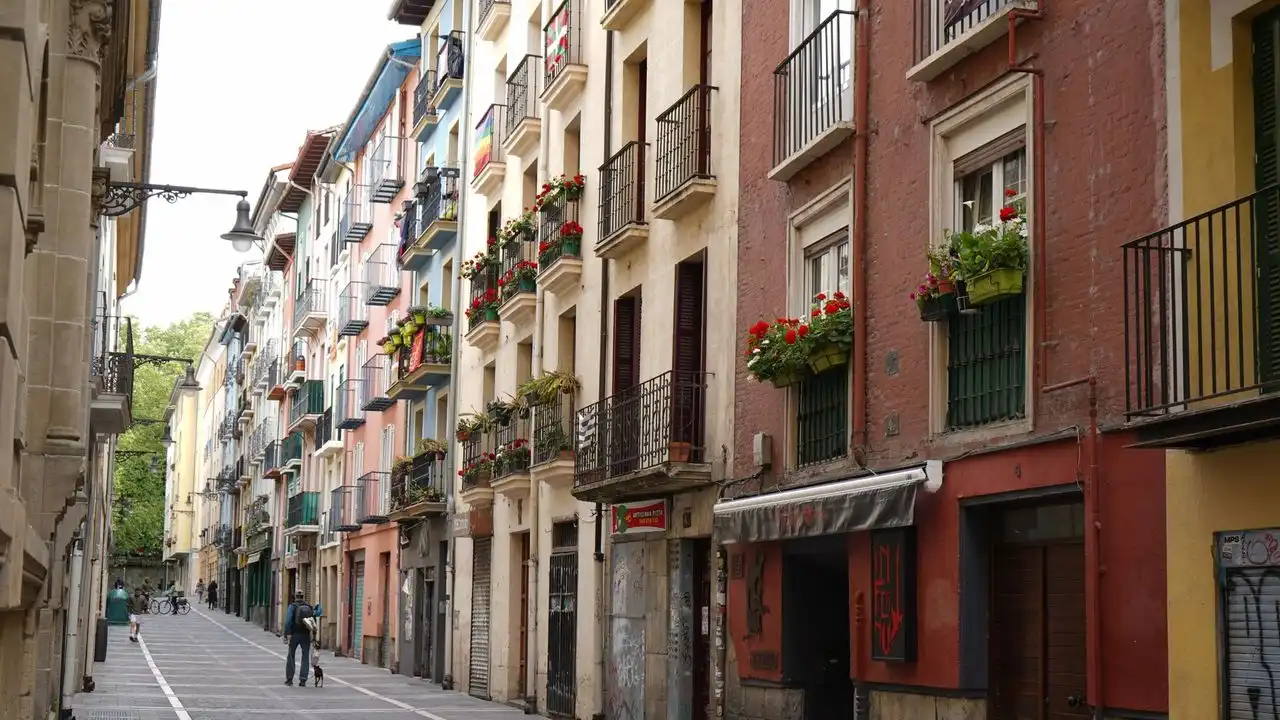
Many people assume Basque is just a dialect of Spanish.
This couldn’t be further from the truth.
Basque and Spanish share almost no linguistic DNA.
They’ve existed next to each other in the Iberian Peninsula for centuries.
However, they belong to completely different language families.
Spanish is a Romance language derived from Latin.
Basque is a language isolate with no known relatives in the world.
Table of Contents:
Language families and origins
Spanish belongs to the massive Indo-European language family.
This means it shares ancient roots with English, French, Hindi, and Russian.
Basque, known natively as Euskara, is a language isolate.
It doesn’t belong to the Indo-European family at all.
Linguists have tried to connect Basque to other languages for decades.
Every attempt to find a genetic relative has failed.
Basque was already spoken in Europe long before the Romans brought Latin to the region.
Core vocabulary differences
Because they come from different families, their core words look entirely different.
Spanish vocabulary comes almost entirely from Vulgar Latin.
Basque vocabulary has its own unique, ancient roots.
Over the centuries, Basque has borrowed some modern vocabulary words from Spanish.
However, the everyday words for basic human concepts share zero similarities.
Look at this table comparing basic words in both languages.
| English | Spanish | Standard Basque |
|---|---|---|
| Hello | Hola | Kaixo |
| One | Uno | Bat |
| Water | Agua | Ura |
| House | Casa | Etxea |
| Dog | Perro | Txakurra |
| Red | Rojo | Gorria |
While standardized Basque (Euskara Batua) uses these words, local Basque dialects often have even more ancient variations that look nothing like Spanish either.
Sentence structure and word order
Spanish typically follows a Subject-Verb-Object (SVO) word order.
This is the exact same grammatical structure we use in English.
Basque usually follows a Subject-Object-Verb (SOV) word order.
The verb is almost always placed at the very end of the sentence.
This makes forming sentences in Basque feel completely backward to a native Spanish speaker.
In Spanish, “I drink water” translates to Yo bebo agua.
Here’s how you build that same sentence in Basque.
Nik ura edaten dut.
In this Basque sentence, nik is the subject, ura is the object, and edaten dut is the verb phrase.
Grammar and the ergative case
Spanish uses prepositions to show the relationship between words in a sentence.
Basque is an agglutinative language.
Instead of using separate prepositions, Basque attaches suffixes directly to the ends of words.
You change the meaning of a root word by stacking multiple endings onto it.
The biggest grammatical difference is how both languages handle subjects.
Spanish is a nominative-accusative language.
This means the subject of a sentence stays exactly the same whether the verb has an object or not.
Basque uses an ergative-absolutive alignment.
In Basque, the subject physically changes its form if it’s performing an action on a direct object.
We add the suffix -k to the subject to mark it as the active agent doing the action.
This complex ergative case doesn’t exist in Spanish or English at all.
Pronunciation similarities and differences
Pronunciation is the only area where Basque and Spanish share some real common ground.
Because they’ve coexisted for so long, their sound systems have influenced each other.
Both languages share the heavily rolled ‘r’ sound and the same five pure vowels (a, e, i, o, u).
However, Basque has several unique consonant sounds that Spanish lacks entirely.
Basque features three distinct ‘s’ sounds and three distinct ‘ch’ sounds.
For example, the Basque letter x sounds like the English ‘sh’.
The consonant combination tx sounds like the ‘ch’ in the English word “church”.
These unique sibilant sounds give Basque a very distinct rhythm and melody.
Even when spoken quickly, Basque never sounds like Spanish to a trained ear.
Learning Basque requires a completely different mindset than learning Spanish.
You can’t simply translate Spanish grammar rules directly into Basque.